
Polycythemia Vera Treatment In india
What is the Polycythemia Vera?
Polycythemia Vera is a kind of cancer that originates inside the bone. The bone marrow cells responsible for creation of red blood cells are infected with the cancer. This causes them to create too many red blood cells, which in turn thickens the blood of the person infected with the disease. If left untreated, the condition may cause blood clots, stroke or heart attacks.
Get Opinion From Doctor
Unlike many other forms of cancer, Polycythemia Vera progresses slowly. It can become a life threatening condition if left untreated, but with the proper treatment, people can maintain an almost normal life. However, there is no cure to the disease and the treatment must be continued for the rest of the life.
Usually, people detect the presence of this disease when they are aged 60 or older, but it can occur at any point of time. Men are at a higher risk of contracting polycythemia vera than women.
It can be difficult to detect the disease without performing a blood test. Other symptoms related to the disease are dizziness and weakness, which can result from other conditions as well. This is why it is important to perform routine blood tests every year. Treatment mainly focuses on reducing the red blood cells from the body to a normal count.
What Causes Polycythemia Vera?
The soft, spongy substance in the middle of your bones, known as bone marrow, is where polycythemia vera develops. Here, fresh blood cells develop. A single gene in a single bone marrow stem cell defect causes PV. Most frequently, a gene known as JAK2 is to blame. The faulty gene instructs the stem cell to continue its own self-replication. All of the replicated cells keep procreating until the abnormal cells in your bone marrow outnumber the healthy ones. The JAK2 gene mutation is often acquired rather than inherited from a family member. It happens at some point in your life for unexplained reasons. However, there have been a few instances where polycythemia vera has affected several family members.
What are the Signs and symptoms of Polycythemia Vera?
Polycythemia Vera develops gradually. For years, the illness may not show any symptoms at all. The thick blood that results from PV is the cause of the signs and symptoms when they appear. The blood’s ability to transport oxygen to every region of your body is slowed by its thickness. Numerous bodily components won’t function normally if you don’t have enough oxygen. PV symptoms and indications include:
- Dizziness, weakness, and headaches
- Breathing difficulties and shortness of breath while laying down
- A swollen spleen causes pressure or a feeling of fullness on the left side of the belly (an organ in the abdomen)
- Blind spots, double vision, and blurry eyesight
- Reddened face, itchiness all over (particularly after a warm bath), and a burning sensation on your skin (especially your hands and feet)
- Gum bleeding as well as copious bleeding from little incisions
- Loss of weight without cause
- Fatigue (tiredness) (tiredness)
- Excessive sweating
- Very painful swelling in a single joint, typically the big toe (called gouty arthritis)
- Rarely, those who have PV may experience bone discomfort.
What are the types of Diagnoses done for Polycythemia Vera?
Your primary care physician could suggest that you see a hematologist if they suspect PV in you. A physician who focuses on identifying and treating blood-related illnesses and ailments is known as a hematologist. Blood tests may be used to identify PV in you. A complete blood count (CBC) is one of these tests, along with additional ones if necessary.
Complete Blood Count: A CBC is frequently the initial test done to identify PV. The CBC analyzes several components of your blood. This test measures your levels of hemoglobin and hematocrit. Red blood cells need hemoglobin, an iron-rich protein, to transport oxygen from the lungs to the rest of the body. Your hematocrit determines how much space red blood cells take up in your blood. PV may be indicated by a high hematocrit or hemoglobin level. The CBC also measures the number of platelets, white blood cells, and red blood cells in your blood. Results that are abnormal might indicate PV, a blood problem, an infection, or another illness. People with PV may also have high white blood cell or platelet counts in addition to high red blood cell counts.
Get Opinion From Doctor
Other Blood Examinations :
Blood smear: A little amount of blood is collected from a vein, often in your arm, for this test. A microscope is used to analyze the blood sample. You can tell whether you have an abnormally high level of red blood cells by looking at a blood sample. The test may also reveal aberrant blood cells connected to myelofibrosis and other PV-related disorders.
Erythropoietin level: The amount of EPO in your blood is determined by this blood test. A hormone called EPO stimulates the production of fresh blood cells in your bone marrow. Low levels of EPO are found in those with PV. EPO levels in those with secondary polycythemia are frequently normal or high.
Tests for Bone Marrow: Your bone marrow’s health can be determined via bone marrow testing. These tests also reveal if your bone marrow is producing enough blood cells normally. Aspiration and biopsy are the two bone marrow examinations. Your doctor uses a needle to aspirate a little quantity of fluid bone marrow. Through a bigger needle, your doctor takes a tiny sample of bone marrow tissue for a biopsy. Following that, the samples are looked at under a microscope. It can be a clue that you have PV if the tests reveal that your bone marrow is producing an excessive amount of blood cells.

What are the Treatment Options for Polycythemia Vera?
No treatment exists for Polycythemia Vera (PV). Treatments, however, can aid in the management of the illness and its side effects. Procedures, medications, and other treatments are used to treat PV. To control the condition, you might require one or more therapies. Controlling symptoms and lowering the risk of consequences, including heart attacks and strokes, are the main objectives of PV treatment. The number of red blood cells and hemoglobin (a protein rich in iron) in the blood are both decreased as a result of photodynamic therapy. Your blood thickness will be closer to normal now.
Blood with a typical thickness travels through blood arteries more easily. This lessens the possibility of blood clots developing and leading to a heart attack or stroke. Regular blood thickness also guarantees that your body receives enough oxygen. Headaches, visual issues, and itching are a few indications and symptoms of PV that can be lessened by doing this. According to studies, treating PV significantly increases your chances of living a longer life. If at all feasible, the underlying cause of secondary polycythemia should be managed throughout treatment. For instance, if carbon monoxide exposure is the root cause, the objective is to identify and address the source of the carbon monoxide.
Phlebotomy: A process called phlebotomy involves drawing some blood from your body. A needle is put into one of your veins during this process. Through an airtight tube in a sterile bag or container, blood travels from the vein. The procedure is comparable to blood donation. Your red blood cell count has decreased after phlebotomy, and your blood thickness is beginning to return to normal. Until your hematocrit level approaches normal, a pint (1 unit) of blood is typically drawn every week. (Hematocrit, a measurement of the amount of room red blood cells occupy in your blood,) Phlebotomy may be required every several months.
Radiation Therapy: Overactive bone marrow cells may be suppressed by radiation therapy. This assists in reducing your red blood cell count and maintaining more or less normal blood flow and thickness. Radiation therapy, however, might increase your risk of leukemia and other blood disorders.
Medicines: To prevent your bone marrow from producing an excessive amount of red blood cells, your doctor may prescribe medication. These drugs include interferon-alpha and hydroxyurea as examples. A drug called hydroxyurea is frequently used to treat cancer. The number of platelets and red blood cells in your blood might be decreased by this medication. As a consequence, this medication aids in enhancing blood flow and bringing blood thickness closer to normal.
Your body naturally produces a chemical called interferon-alpha. PV can also be treated with it. Your immune system may combat hyperactive bone marrow cells as a result of interferon-alpha. This assists in reducing your red blood cell count and maintaining more or less normal blood flow and thickness.
Low-dose aspirin: To lower the risk of blood clotting, doctors frequently prescribe this over-the-counter medicine. Aspirin, taken in small doses daily, helps keep blood platelets from adhering to one another. It can also aid in easing hand and foot irritation symptoms. If you have stomach ulcers, it might not be a smart option because it’s rough on the stomach and makes you more likely to bleed. You could be given additional treatment choices if your symptoms have gotten worse or if you have a history of thrombosis (blood clotting) and are thought to be at higher risk.
Bone marrow transplant: In some circumstances, a bone marrow transplant may be advised. Your medical professional will take into account a number of variables, including the seriousness of your ailment and the ability of your body to repair itself.
Get Opinion From Doctor
Polycythemia Vera Treatment Cost in India ?
India offers healthcare at significantly lower costs as compared to other countries. Furthermore, the quality of the medical services and treatment provided there is on par with that of the best hospitals in the world. Even without accounting for travel, lodging, and food expenses, Polycythemia Vera Treatment costs in India start from USD 5800.
In India, the total cost of a Polycythemia Vera Treatment might vary based on a variety of factors, including,
- Depending on the hospital’s preferences, the cost of treatment packages may vary.
- The doctor’s knowledge and expertise in the area.
- The situation of the patient: The patient’s illness and whether additional treatment modalities are necessary for complete care.
- Hospitalization and travel time in the nation.
- Post-operative care is required.
- categorization of a hospital room.
Q: What is the primary therapy for vera polycythemia?
A: Frequent blood draws performed with a needle in a vein are the most typical polycythemia vera therapy (phlebotomy). The process is the same as when giving blood. Your blood volume and the number of extra blood cells both drop as a result.
Q: Can someone with polycythemia lead a typical life?
A: PV, or polycythemia vera, is an uncommon kind of blood cancer. Although there is now no therapy for PV, the condition may be managed and you can live a long time with it.
Q: What should I stay away from if I have polycythemia vera?
A: Foods high in fat should be limited if you have polycythemia vera since they can raise your risk of blood clots and inflammation. These include deep-fried dishes, desserts prepared with heavy creams or a lot of butter, poultry with the skin on, and red meat with fat.
Q: Does polycythemia need chemotherapy?
A: An effective method of preventing red blood cells from being produced is to use this mild form of chemotherapy. The most popular chemotherapeutic agent used to treat PV is hydroxycarbamide. You might have certain negative effects with this medication. These might include diarrhea, increased infections, or constipation.
Q: What accounts for the majority of deaths in polycythemia?
A: The most frequent cause of mortality in those with PV is blood clots. Blood clots can stop the flow of blood to crucial organs when they develop in blood arteries. This may result in potentially fatal consequences including a heart attack, stroke, or venous thrombosis.
Get Opinion From Doctor
We offers these Services
- Providing a doctor’s opinion and proper quotation
- Selecting the best hospital and doctor as per your case
- Arranging a call with the doctor (if the case required)
- Visa assistance, Providing Visa Invitation Letter (VIL)
- Providing full guidance how to get Visa from your country
- Providing total cost including treatment, air tickets, accommodation, and food
- Assitance to book flight ticket from your country
- Arranging airport pick up/ drop
- Providing professional language interpreter
- Booking accommodation and guest house as per your budget/ prefrence
- Providing help in money exchanging
- Providing local sim card
- Arranging video consultation with specialist doctor if case requires

BLK-Max Hospital
Number of beds: 700
ICU Beds: 175
Airport Distance: 13 Km
About Hospital:
- BLK Super Speciality Hospital was established by Dr. B.L. Kapur in 1959. It was inaugurated by the then Prime Minister of India, Pandit Jawahar Lal Nehru.
- BLK Super Speciality Hospital was established by Dr. B.L. Kapur in 1959. It was inaugurated by the then Prime Minister of India, Pandit Jawahar Lal Nehru.
- BLK has a unique combination of the best in class technology, put to use by the best names in the professional circles to ensure world-class health care to all patients.
- Spread on five acres of land, with a capacity of 700 beds,
- BLK Super Speciality Hospital is one of the largest tertiary care private hospitals in the country,
- BLK has consistently ranked amongst the Top 10 Multi Super Specialty Hospitals in Delhi NCR.
- The outpatient services are spread on two floors with 80 consultation rooms. All ambulatory services have been designed with the intent to create dedicated aides for all specialities, with their interventional services in close vicinity.
- The hospital has 17 state-of-the-art well equipped modular operation theatres with three-stage air filtration and gas scavenging system to ensure patient safety. All the Operation Theatres are fitted with best in class pendants, operating lights, anaesthesia workstations and advanced information management system.
- The Hospital has one of the biggest critical care programmes in the region with 125 beds in different intensive care units viz Medical, Surgical, Cardiac, Paediatrics, Neonatology, Neurosciences and Organ Transplant.
- Each Critical care unit is equipped with high-end patient monitoring devices, ventilators and dedicated isolation rooms.
- Liver and Renal Transplant Centres have been equipped with dedicated ICUs with individual HEPA filters, specialized instruments and equipment.
- Awarded the Prestigious Gold Award at Hospital Management Asia (HMA), Bangkok (2013) and HMA Awards 2014.

Max Hospital Saket
Number of beds: 500
ICU Beds: 267
Airport Distance: 13 KM
About Hospital:
- Max Super Speciality Hospital at Saket is one of the topmost healthcare service
- Providers in India. The multi-super speciality hospital has a capacity of over 500 beds, 250 functional beds. It is equipped with state-of-the-art facilities, advanced technologies.
- With the help of over 300 leading specialist Doctors, strong nursing staff, and state-of-the-art innovative medical tools.
- Max Hospital, Saket aims to provide the highest standard of medical care to the patients, right from admission and all the way to the patient discharge.
- Max Smart Super Speciality Hospital, Saket, offers the advantage of integrated medical care in a multidisciplinary setting provided by a faculty of highly qualified doctors, nurses, & healthcare professionals.
- Max Smart Super Speciality Hospital, Saket, is a regional hub for complex procedures such as neurovascular intervention, targeted cancer treatments, heart surgeries, orthopaedic surgeries, liver & kidney transplant, and fertility treatments.
- With over 35 Speciality units, this renowned hospital caters to many patients from different parts of India as well as abroad on an everyday basis.
- The super specialty hospital is well known for having Asia’s first and the world’s third BrainSUITE technology.
- It is an advanced Neurosurgical operation theatre, which allows the medical team to use MRI during the surgery. This sophisticated technology can be used for various kinds of brain surgery.
- Max Hospital group is also the first super speciality tertiary care centre that has the facility for advanced cardiac life support ambulances and air evacuation service.

Indraprastha Apollo Hospital
No. of beds: 900
ICU Beds: 262
Airport: 20kms
Brief About:
- Indraprastha Apollo Hospital is a flagship hospital of India’s foremost healthcare groups,the Apollo Group. It is a highly renowned multi-speciality facility that offers tertiary and quaternary care services to domestic and international patients.
- The 900 bedded hospital is outfitted with the most modern technology for diagnostics as well as therapeutic purposes.
- A team of highly trained medical professionals work under all the 52 specialities at the hospital.
- Indraprastha Apollo is an accredited hospital with international standard quality services for patient care and safety norms.
- The hospital uses its own system, called The Apollo Standards of Clinical Care (TASCC), to maintain top standards for all kinds of treatment and procedures.
- The Apollo Organ Transplant Program is one of the most successful programs in the country that has performed over 1627 transplants (410 Liver and 1210 Kidney), including 979 transplants (289 Liver and 690 Kidney) performed at the Transplant Program in Delhi.
- It is the First Hospital in India to perform a Paediatric Liver Transplant in 1998. They have successfully performed various kinds of liver transplant for different kinds of liver conditions.
- Indraprastha Apollo Hospital has some world-reputed surgeons and specialists who are the pioneers of their specialities, especially in Cardiology and Neurology.
- The hospital has won many national and international accolades and continues to be one of the top healthcare service providers in India.
- It is the first hospital in India to get international accreditation by international (JCI) consecutively for the fourth time

Artemis Hospital Gurgaon
Number of beds: 600
ICU Beds: 185
Airport Distance: 19 Km
Brief About:
- Artemis Hospital, established in 2007, spread across 9 acres, is a 600plus bed; state-of-the-art multi-speciality hospital located in Gurgaon, India.
- Artemis Hospital is the first JCI and NABH accredited hospital in Gurgaon.
- Designed as one of the most advanced hospitals in India, Artemis provides a depth of expertise in the spectrum of advanced medical & surgical interventions, a comprehensive mix of inpatient and outpatient services.
- Artemis has around 400 + best doctors. It has put modern technology in the hands of renowned doctors from across the country and abroad to set new standards in healthcare.
- The medical practices and procedures followed in the hospital are research-oriented and benchmarked against the best in the world.
- Top-notch services, in a warm, open patient-centric environment, clubbed with affordability, has made us one of the most revered hospitals in the country.
- Most Promising Start-Up of the Year 2007 award – Express Healthcare magazine
- Best IT Implementation for the Year 2008 – PC Quest magazine for Hospital Information System
- Best institute for Medical Value Year 2010 – The CNBC Awaaz travel awards
- Asia Pacific Hand hygiene excellence Award Year 2011 – World Health Organisation (WHO)
- The patient base is 400000
- 750000 surgeries conducted since the inception

Medanta The Medicity Hospital
Number of beds: 1250
ICU Beds: 300
Airport Distance: 18 KMs
Brief About:
- Medanta – The Medicity is amongst India’s largest and most renowned multi-super speciality healthcare centre with 1250 beds, 29 super speciality units and more than 800 accomplished doctors.
- Supported by state-of-art infrastructure, all the departments in the hospital are fully equipped with cutting-edge technology, modular Operation Theatre and modernized monitoring systems in ICUs.
- The panel of doctors from Medanta, headed by A.S.Soin performed the first successful intestinal transplant in India.
- The team of Medanta has performed over 15,000 cardiac surgeries and 2500 joint replacement surgeries.
- It Has performed over 500 living donor liver transplants. It is the highest number of liver transplants done in India and the 2nd highest in the world.
- Further to its credits, the doctors at Medanta are highly trained experts with international repute and have contributed in making world records and claimed many firsts not only in India but on a global scale.
- It has all kinds of procedures like Liver transplant, intestine,transplant and Knee Replacement surgery.
- The hospital maintains a high standard of quality clinical care and is operational with the latest technologies like 256 Slice CT, Brain Suite with Intraoperative MRI Imaging, Da Vinci a surgical system with Robot for Minimally Invasive Surgery, Artis- Zeego Endovascular Surgical Cath Lab- with combined operating room.
Get Opinion From Doctor
We offers these Services
- Providing a doctor’s opinion and proper quotation
- Selecting the best hospital and doctor as per your case
- Arranging a call with the doctor (if the case required)
- Visa assistance, Providing Visa Invitation Letter (VIL)
- Providing full guidance how to get Visa from your country
- Providing total cost including treatment, air tickets, accommodation, and food
- Assitance to book flight ticket from your country
- Arranging airport pick up/ drop
- Providing professional language interpreter
- Booking accommodation and guest house as per your budget/ prefrence
- Providing help in money exchanging
- Providing local sim card
- Arranging video consultation with specialist doctor if case requires

Fortis Memorial Research Institute
Number of beds: 1000
ICU Beds: 298
Airport Distance: 17 KMs
Brief About:
- Fortis Memorial Research Institute was established in 2001.
- It is an outstanding multi-speciality quaternary care hospital,having the top-notch infrastructure, advanced equipment, highly qualified and experienced medical professionals and super sub-specialists.
- Fortis Hosptial Gurgaon is an advanced centre of excellence in Robotic Surgery, Neurosciences, Oncology, Renal Sciences, BMT, Organ Transplants, Orthopaedics, Cardiac Sciences and Obstetrics & Gynaecology.
- JCI & NABH Accredited Hospital, NABL Accredited Lab, NABH Certified Nursing Excellence, NABH Accredited Blood Bank
- FMRI is a 1000 bedded and 15 Operation theaters and over 400 diagnostics centres (including JVs).
- Medical facility endowed with a dedicated team of 200 world-renowned doctors, covering a number of specialities, who aim to provide the best quality medical care to all the patients, national as well as international.
- This hospital is well set up with the latest technologies and equipment throughout all the specialties and research labs, which are accredited by NABL.
- This ensures that the patients at FMRI receive diagnostic results and treatment with high accuracy and in minimum time.
- With a vision for the community, FMRI operates various speciality clinics such as, for Paediatrics, Nephrology, Neurology, Gynecology, Orthopedics, Oncology and many more, which provide long term healthcare management and follow up care.
- FMRI is the premium healthcare provider and endeavours to be known as the “Mecca of Medicine” – the ultimate healthcare destination.

Sanar International Hospital
Number of beds: 130
ICU Beds: 35
Airport Distance: 20 Km
About Hospital:
- Sanar International Hospital was established in 2018.
- Sanar International Hospital founded by Mr. Naresh Kapoor.
- Sanar International Hospital offers comprehensive advanced surgical care in specialties like Cancer, Heart, Blood and Marrow Transplant, Lung, Liver, and Neurosciences along with other major departments with advanced state-of-the-art facilities.
- It establishes itself as a center of excellence with world-class infrastructure, a team of experienced surgeons, doctors, and nursing staff.
- Sanar International Hospitals is not only leaving a mark amongst domestic patients but also making it a preferable choice for patients from other countries.
- Sanar International Hospital offers comprehensive advanced surgical care in over 15 Specialties.
- The hospital’s skilled faculty is on numerous medical clinical & advisory boards and lectures nationally & internationally on a regular basis.
- It focuses on High-End Complex Surgeries with cutting-edge technology to enable the carrying-out of the most complex surgical procedures with clinical excellence at par with anywhere in the world.
- All facilities are based on the latest revolutionary and technological advancements of global standards particularly in radio diagnosis, research, clinical and surgical practices.
- Hospital technology & Radio Diagnostic foray is of the latest generation of MRI, CT, Digital X-Ray, Ultrasound, pharmacy, ambulance & 24 hrs Transfusion Medicine, Laboratory & Emergency services.

W Pratiksha Hospital
Number of beds: 110
ICU Beds: 31
Airport Distance: 19 KMs
About Hospital:
- Established in 1995, W Pratiksha Hospital is a 110+ bedded flagship hospital of the Pratiksha group.
- W Pratiksha Hospital in Gurgaon, the flagship hospital of Pratiksha Group is a one-of-its-kind facility in Gurgaon that brings to you 30 years of experience.
- The hospital has treated more than 25,000 people In 2018.
- The chairman of the Pratiksha group – Dr. Pramod Kumar Sharma is one of the pioneers of IVF treatment.
- The hospital has done more than 5500+ IVF success
- It is an accredited hospital with NABH,& NABL.
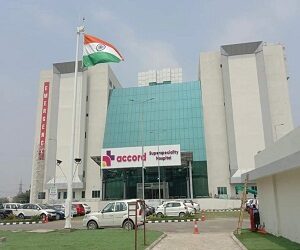
Accord Superspeciality Hospital
Number of beds: 380+
ICU Beds: 41
Airport Distance: 46 Km
About Hospital:
- The story of Accord began with the thought of leveraging the new age technology with the healthcare infrastructure to serve the patients, rightly, effectively, and timely.
- Accord Superspeciality Hospital (A Unit Of SCL Healthcare Pvt. Ltd) is India’s first smart hospital and one of the first of its kind in the world.
- Accord Superspeciality Hospital aims at providing technologically advanced healthcare services to international patients who are looking out for medical tourism in India.
- It delivers world-class patient care services.
- Highly experienced team of super specialist available at accord superspeciality hospital
- It believes in enhancing the expertise of doctors through the use of augmented artificial intelligence, generated through various systems and software.
- Its smartness is the result of a super-brain that accompanies the hospital.

Aakash Health Care Delhi
Number of beds: 230
ICU Beds: 70
Airport Distance: 10 Km
About Hospital:
- Aakash Healthcare Super Speciality Hospital is a tertiary care facility, with 15 Dialysis, and 70 Critical care beds for treating the most complex cases in the National Capital Region (NCR) of Delhi, Dwarka.
- The hospital is equipped with state of the art infrastructure, latest technology, competent clinicians and compassionate staff.
- Aakash Healthcare Super Specialty Hospital is known for its leading care in Orthopaedic and Joint replacement surgery.
- The hospital also has a 24×7 ‘Trauma & Emergency Center’, blood bank, with state of art Neonatal and Paediatric ICU.
- The Super Specialty Hospital is being managed by highly qualified and trained experts from their respective fields and a unified team of healthcare experts ensure 24×7 comprehensive patient care
- The Hospital has deployed high-end technologies and smart digital systems along with robust Hospital Information Systems to address complex medical needs and convenience of patients.
- Mr. J C Chaudhry is the chairman of Hospital and Dr. Aashish Chaudhry is Managing Director, who is also a renowned Orthopedic Surgeon in this region.
- Total number of surgeries done is 25000+ till now.
Get Opinion From Doctor
We offers these Services
- Providing a doctor’s opinion and proper quotation
- Selecting the best hospital and doctor as per your case
- Arranging a call with the doctor (if the case required)
- Visa assistance, Providing Visa Invitation Letter (VIL)
- Providing full guidance how to get Visa from your country
- Providing total cost including treatment, air tickets, accommodation, and food
- Assitance to book flight ticket from your country
- Arranging airport pick up/ drop
- Providing professional language interpreter
- Booking accommodation and guest house as per your budget/ prefrence
- Providing help in money exchanging
- Providing local sim card
- Arranging video consultation with specialist doctor if case requires
